

Would It Be Smart to Wait and See If My Roof Gets Damaged During Storm Season? Pros, Cons, and What Homeowners in the RGV & Coastal Bend Should Know
If you’re a homeowner in South Texas, chances are you’ve asked yourself this question at least once:
“Should I wait and see if my roof gets damaged during storm season before replacing or repairing it?”
In the Rio Grande Valley and the Coastal Bend, storm season brings hail, high winds, heavy rain, and even hurricanes. Some homeowners consider waiting, hoping insurance will eventually cover a full roof replacement. While this strategy can work in certain situations, it also carries serious risks.
At XYZ Roofing & Restorations, we believe homeowners deserve clear, honest guidance — not sales pressure. Let’s break down the pros and cons of waiting so you can make an educated decision that protects your home, your finances, and your peace of mind.
Understanding Storm Season in the RGV & Coastal Bend
The Rio Grande Valley — McAllen, Harlingen, Brownsville — and the Coastal Bend — Corpus Christi and surrounding areas — are uniquely exposed to:
- Strong straight-line winds
- Hailstorms that are often underestimated
- Tropical storms and hurricanes
- Prolonged heat that weakens roofing materials over time
Roofs in this region already age faster than the national average. Storm season doesn’t just damage roofs — it accelerates existing problems that may already be developing beneath the surface. If you want a clear picture of how South Texas climate affects your roof’s lifespan, it helps to review how long a roof actually lasts in South Texas [xyzroofingandrestorations.com/how-long-does-a-roof-last-in-south-texas/].
Pros of Waiting to See If Storm Damage Occurs
Let’s start with why some homeowners choose to wait — because there are legitimate reasons.
1. Potential Insurance Coverage
If a qualifying storm causes enough damage, your insurance may cover:
- Full roof replacement
- Labor and material costs
- Code upgrades depending on your policy
For homeowners with older roofs who can’t afford out-of-pocket replacement, this can feel like a financially smart move — and sometimes it is.
2. Avoiding Immediate Out-of-Pocket Costs
Replacing a roof is a major investment. Waiting may allow you to delay spending, free up cash for other priorities, and buy time to plan and budget properly.
This is especially common when the roof appears intact from the ground and shows no active leaks.
3. Your Roof May Still Have Life Left
Not every old roof is a failing roof. If your roof has no leaks, has good ventilation, and was installed correctly, it might survive another storm season without major issues.
Waiting with a documented, inspected roof in good condition is a very different decision than waiting on a roof that is already deteriorating. This is one reason why understanding the age of your roof [xyzroofingandrestorations.com/how-do-i-know-the-age-of-my-roof/] — not just how it looks from the ground — matters so much before making any decision.
Cons of Waiting — What Most Homeowners Don’t Hear Until It’s Too Late
This is where waiting becomes risky — especially in South Texas.
1. Small Damage Becomes Big Fast
Storm damage isn’t always dramatic. Many issues start as lifted shingles, hairline cracks from hail impact, or compromised flashing around vents and chimneys.
Left unaddressed, these turn into interior leaks, mold growth, decking rot, and insulation damage. By the time you notice a problem inside your home, insurance may classify it as wear and tear rather than storm damage — and deny the claim entirely. This pattern is one of the most costly mistakes homeowners make, and it’s covered in detail in our guide on common roofing mistakes that cost homeowners thousands in South Texas [xyzroofingandrestorations.com/common-roofing-mistakes-that-cost-homeowners-thousands-in-south-texas/].
2. Insurance Claim Denials Are More Common Than You Think
One of the biggest misconceptions we hear across the RGV and Coastal Bend is:
“Insurance will cover it when it finally fails.”
In reality, delayed claims raise red flags. Older unaddressed damage is frequently denied. Carriers may argue the roof was already compromised before the storm occurred. To better understand how claim payouts are evaluated and what affects approval or denial, it helps to review how an insurance roof claim payout is calculated [xyzroofingandrestorations.com/understanding-an-insurance-roof-claim-payout-including-the-mortgage-company/].
3. You May Miss the Claim Window Entirely
Most insurance policies have strict deadlines to report storm damage — sometimes as short as six to twelve months after the event.
If you wait too long, you may lose eligibility entirely, or even legitimate storm damage may not qualify. A professional roof inspection [xyzroofingandrestorations.com/get-a-complimentary-roof-inspection/] after any significant storm is one of the most important steps you can take to protect your claim eligibility before that window closes.
4. Storms Don’t Always Damage the Roof Enough for a Full Claim
Many storms cause cosmetic or partial functional damage that insurance carriers won’t approve for a full replacement. In these cases, homeowners who waited are left with a weakened roof, out-of-pocket repair costs, and a shortened remaining lifespan — without the full coverage outcome they were counting on.
5. Higher Costs Down the Road
When damage compounds, costs escalate. Repairs become replacements. Emergency leaks cost more to address. Interior damage to drywall, insulation, and flooring adds thousands more to the final bill.
What could have been a planned, controlled roofing project becomes a reactive emergency. Understanding why roof prices vary [xyzroofingandrestorations.com/why-roof-prices-vary/] can help you see why proactive planning almost always costs less than waiting for a crisis.
The Smart Middle Ground — Don’t Guess, Inspect
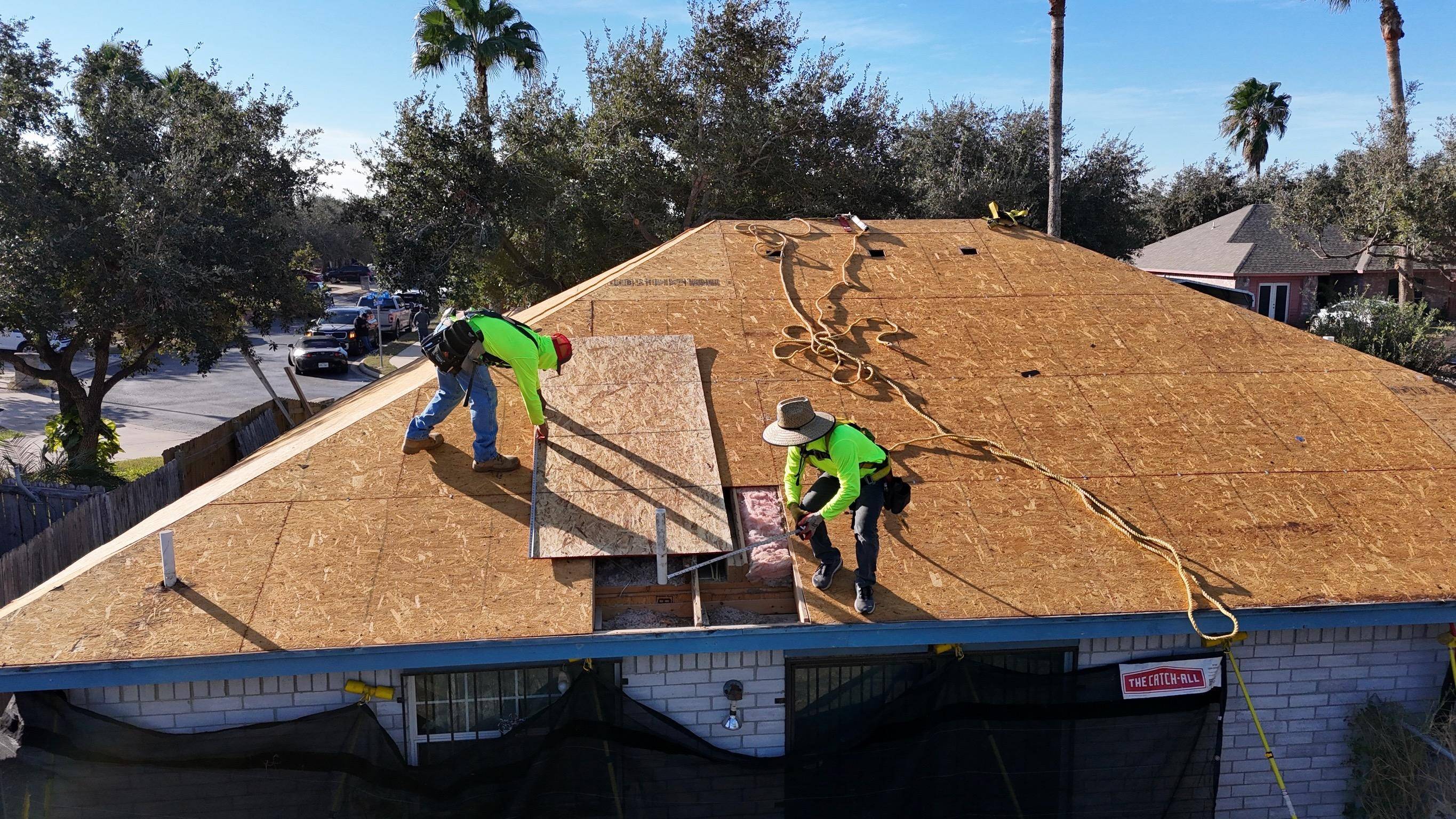
At XYZ Roofing & Restorations, we don’t believe in a “wait and pray” approach. We recommend a strategic plan that puts you in control regardless of what storm season brings.
Get a Professional Roof Inspection
A proper inspection identifies current storm damage, documents your roof’s condition with photos, and establishes a baseline that protects your insurance eligibility. This protects you whether you decide to file a claim now, repair proactively, or wait with full confidence knowing exactly what condition your roof is in.
You can schedule a complimentary roof inspection [xyzroofingandrestorations.com/get-a-complimentary-roof-inspection/] to get a clear, honest picture of where your roof stands before storm season arrives.
Understand Your Roof’s True Condition
Not all roofs are equal. Age alone doesn’t tell the full story. A complete evaluation looks at shingle integrity, fastener security, flashing and penetration conditions, and ventilation performance.
This matters even more in coastal and high-wind zones like Corpus Christi and the Coastal Bend. Proper ventilation is one of the most overlooked factors affecting how long a roof lasts in South Texas — if you are unsure about your current setup, it may be worth reviewing how ridge vents, turtle vents, and solar vents compare [xyzroofingandrestorations.com/ridge-vent-vs-turtle-vent-vs-solar-vent-which-is-best/] and what each system offers.
Make a Plan Instead of Hoping
A smart plan may include minor repairs now to extend the life of your current roof, documentation for any future storm claims, and a realistic budget and timeline for replacement on your schedule.
This puts you in control — not the weather and not the insurance company. It also helps to understand what your deductible obligations are under Texas law [xyzroofingandrestorations.com/do-i-need-to-pay-my-insurance-deductible/] before any claim situation arises.
When Waiting Might Make Sense
Waiting may be reasonable if:
- Your roof is newer — under ten years old
- No existing damage is found during a professional inspection
- You have documented proof of your roof’s current condition
- You fully understand your insurance policy’s claim deadlines and coverage limits
Even then, annual inspections are essential in South Texas. Conditions change quickly and documentation is always your best protection.
When Waiting Is a Bad Idea
Waiting is risky if:
- The roof is 15+ years old
- You have had past leaks or repeated repairs
- Shingles are already brittle, curling, or lifting
- You live in a high-wind or coastal zone
- You have not had a professional inspection in more than a year
In these situations, waiting almost always costs more — not less. These are also the scenarios most likely to result in claim complications, voided warranties, and interior damage that goes well beyond the roof itself.
Why Homeowners Across the RGV & Coastal Bend Trust XYZ Roofing & Restorations
We are not here to pressure you into a new roof. We are here to give you honest information so you can make the best decision for your home and family.
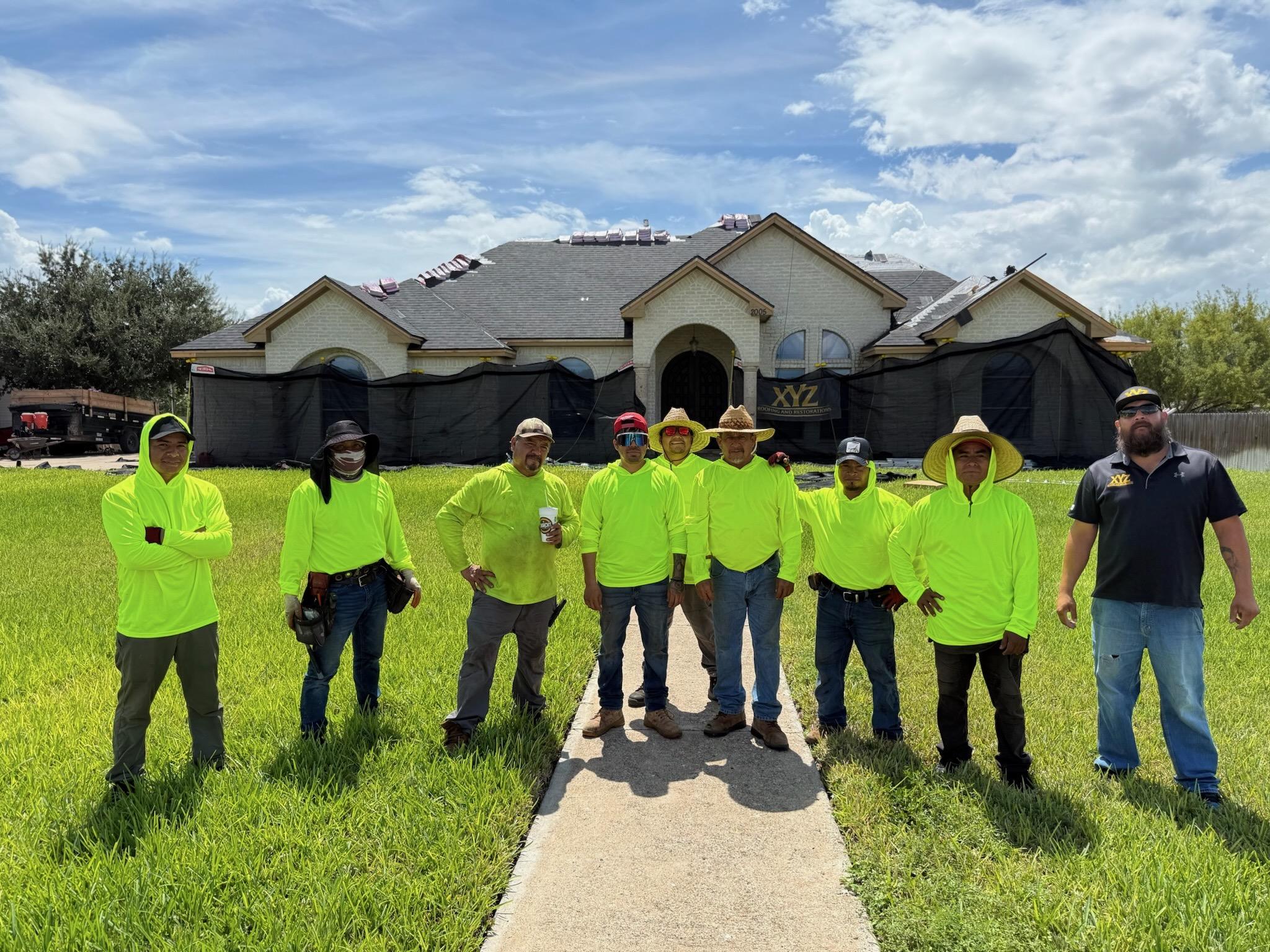
Homeowners across McAllen, Harlingen, Brownsville, and Corpus Christi trust us because we educate before we sell, specialize in storm damage evaluations, understand South Texas weather patterns, and advocate for homeowners — not insurance companies.
Our goal is simple: protect your home and your peace of mind. If your roof is connected to an active storm damage situation, you can learn more about how our storm damage roof repair process works and what the insurance claim journey looks like from start to finish.
Final Thoughts — Smart Decisions Beat Storm Gambling Every Time
Waiting for storm damage can feel tempting — but it’s not a strategy, it’s a gamble.
The smartest homeowners in McAllen, Harlingen, Brownsville, and Corpus Christi don’t guess. They inspect, document, and plan — so they stay in control of their timeline and their budget no matter what storm season brings.
Whether you decide to wait, repair, or replace, knowledge is your strongest protection. If you are unsure about your roof’s condition, reach out to XYZ Roofing & Restorations for an honest, professional evaluation.
There is nothing more expensive than waiting too long.
Frequently Asked Questions
How soon after a storm should I inspect my roof? As soon as it is safe to do so — ideally within days of a significant weather event. Most insurance policies require damage to be reported within a set window, so prompt action protects your eligibility. You can also review whether your insurance rate will go up if you open a roof claim before deciding how to proceed.
Can I file a roof insurance claim on an old roof? Yes, but age and prior condition matter. Carriers evaluate whether damage is storm-related or the result of normal wear and tear. Documentation of your roof’s pre-storm condition strengthens your claim significantly, which is why a professional inspection before storm season is so valuable.
What if my roof looks fine but I had a big storm? Hail and wind damage is often invisible from the ground. Bruised shingles, granule loss, and lifted flashing can go unnoticed for months until a heavy rain reveals a serious leak. A professional inspection with photo documentation is the only reliable way to know where you stand — and to protect your insurance eligibility if damage is found.